Infant Swimming and Brain Development: What Really Happens
Does infant swimming really boost brain development? Here is what the sensory play, movement and bonding in water actually do.
By Carol Koh · Fabulous Swim School
Why Water Play Is More Than Just Fun
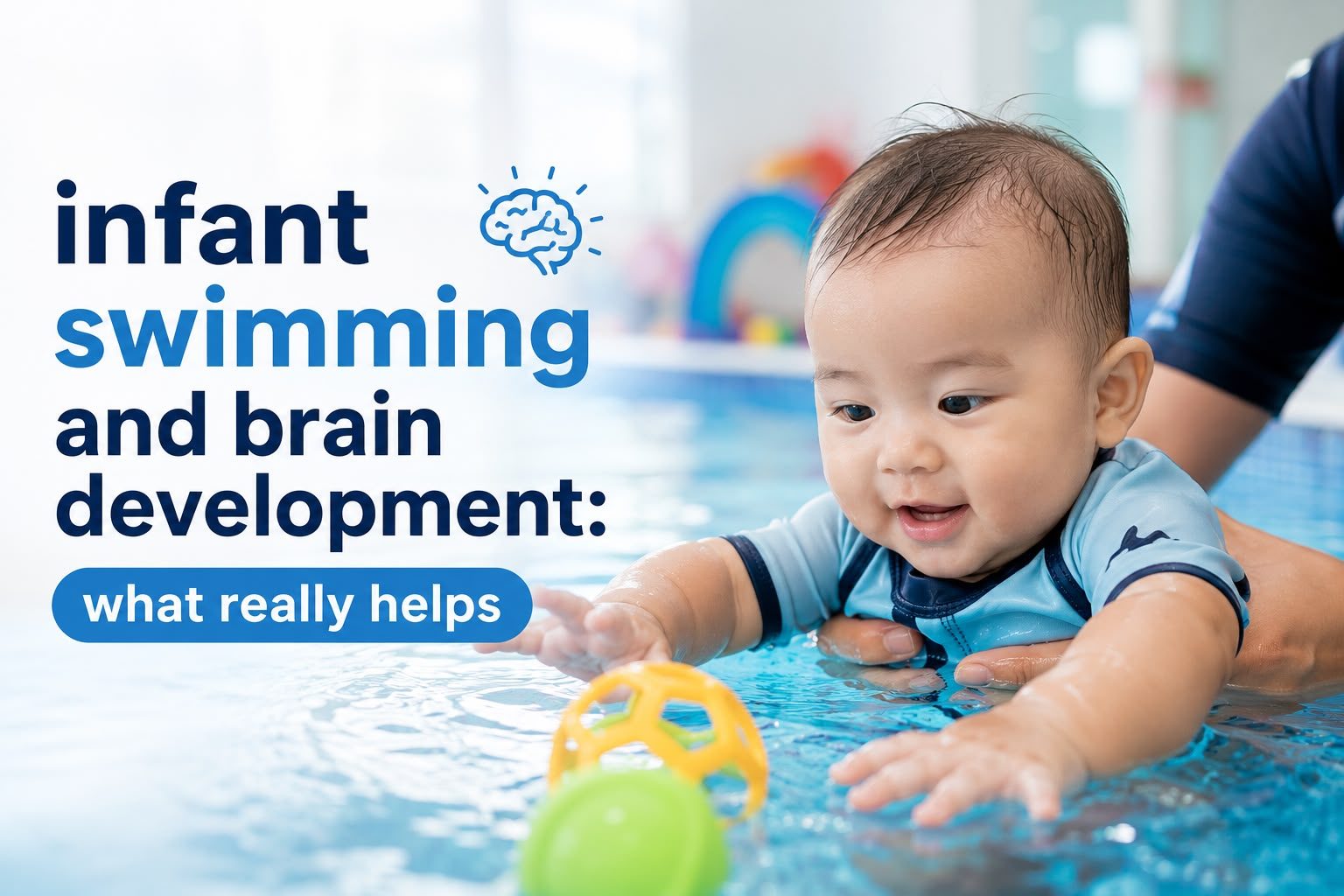
When people talk about babies "getting smarter" from swimming, it can sound like marketing. What is actually true is more modest, and still worth knowing: the first two years are when a baby's brain is forming connections fastest, and any activity that combines movement, touch, sound and a parent's calm presence gives that development something rich to work with. Water happens to combine all four at once, which is why our Infant programme (4 to 23 months) leans so heavily on gentle water play rather than drills.
Sensory Stimulation, All at Once
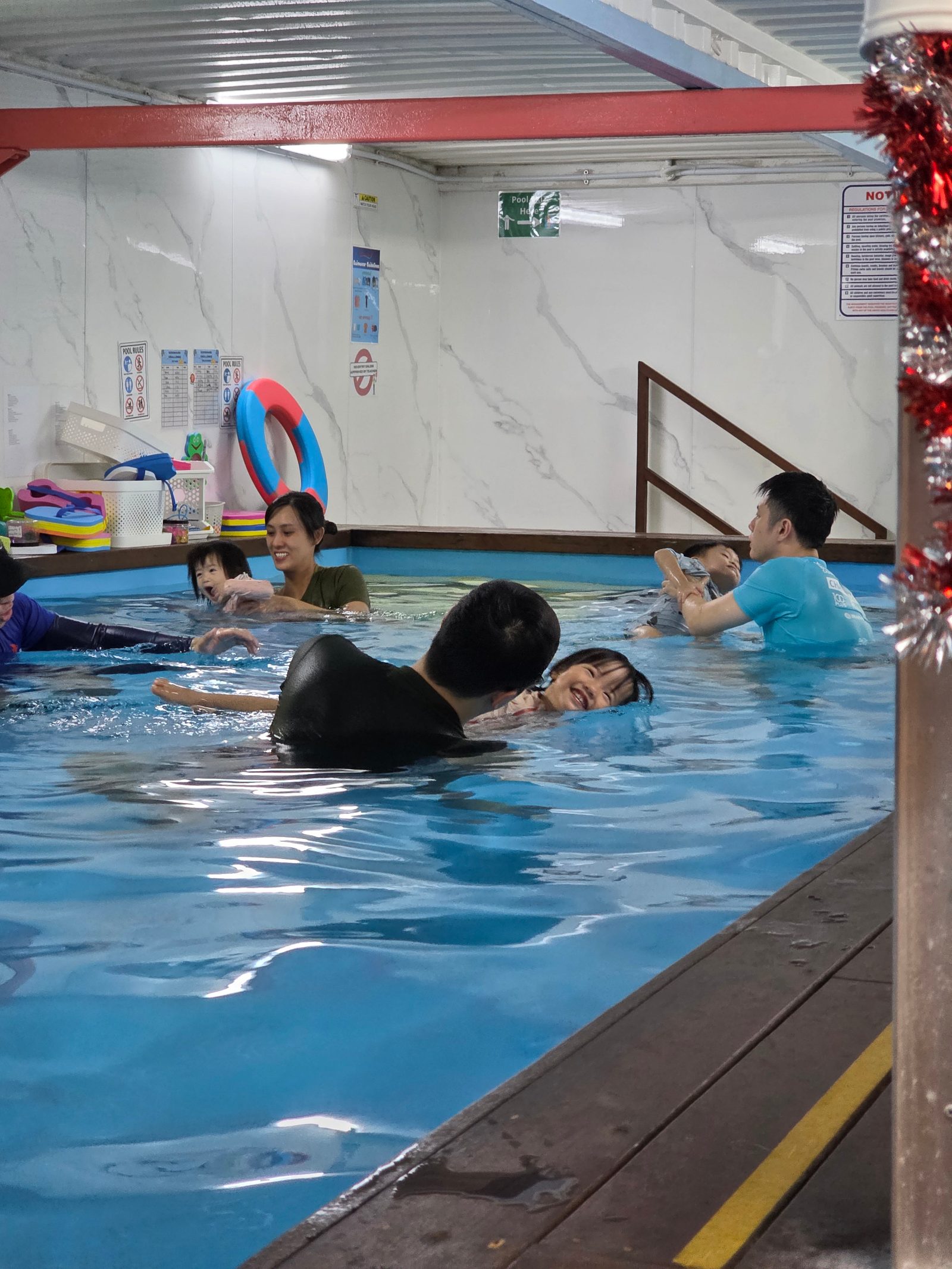
In the pool, a baby takes in far more sensory information per minute than they would sitting in a cot or bouncer. The temperature of the water (kept at 31 to 34 degrees Celsius in our indoor heated pool at 102 Ulu Pandan Road, so it never feels like a shock), the resistance against their arms and legs, the sound of splashing and songs, and the sight of ripples and reflections all arrive together. This kind of layered sensory input, especially paired with a parent's voice and touch, is exactly the sort of stimulation that helps a developing brain build connections between what it senses and how it moves.
Motor Skills and Cross-Pattern Movement
Kicking, reaching and turning in water asks a baby to coordinate both sides of their body in ways that are harder to practise on dry land at this age. This is sometimes called cross-pattern or bilateral movement, and it is a building block for later skills like crawling, walking and eventually handwriting. Our coaches use songs and playful activities to get babies moving both arms and legs together, gently guiding floating and gliding so the movement stays safe and supported rather than forced.
Because classes are capped at 5 babies, coaches can adjust the pace for each child instead of running one script for the whole group. A baby who is more cautious gets more time simply floating and adjusting; a baby who is confident and kicking hard gets more chances to practise controlled movement.
The Bonding Connection Matters Too
A parent or guardian is required in the water for every Infant class, and this is not just a safety rule. A baby's stress response settles fastest when a trusted adult is close, holding and responding to them, and a calmer baby is a baby whose brain is free to notice and learn from what is happening around them, rather than spending its energy on alertness or distress. The physical closeness of being held in the water, skin against skin more often than on land, also supports the same bonding that helps with sleep and feeding at this age.
What This Looks Like Week to Week
None of this requires anything dramatic. A typical Infant class is 30 minutes of songs, gentle submersion practice, floating with support and simple water play, not structured "brain training." The value comes from repetition: the same comforting routine, water temperature and coach voice each week lets a baby's nervous system relax faster into the session, which is when they are most open to trying something new, like blowing bubbles or floating on their back for a few seconds longer than last time.
We also record progress videos during class, partly so coaches can track a baby's development over the term, and partly so parents can see, in slow motion, movements that happen too fast to catch live.
FAQ
Is there research proving swimming makes babies smarter?
We are careful not to overstate this. What is well established is that babies develop through sensory and motor experience, and water play offers a rich combination of both, alongside close parent contact. We present it as valuable early development and bonding, not as a guaranteed IQ boost.
What age should my baby start if I want these developmental benefits?
Our Infant programme accepts babies from 4 months old. Many parents start around this age since it lines up with better head and neck control, but every baby develops at their own pace, and our coaches adjust accordingly.
Do I need to know how to swim myself to bring my baby?
No. You just need to be comfortable standing in the shallow end and holding your baby. A parent or guardian is required in the water for every Infant class, both for safety and because that closeness is part of the benefit.
How often should we attend for it to make a difference?
Consistency matters more than intensity at this age. One class a week, attended regularly, gives your baby the repeated, familiar sensory experience that helps them settle in and progress, rather than one-off sessions spaced far apart.
Ready to get your child swimming?
Book a trial at our warm indoor heated pool.