Eczema and Swimming Lessons in Singapore: What to Know
Chlorine worries stop many eczema parents at the pool gate. Here's what actually helps — and how our salt-chlorinated pool fits in.
By Carol Koh · Fabulous Swim School
"Won't the pool make her eczema worse?" is one of the first questions we get from parents booking a trial lesson. Eczema is common among Singaporean children, and between the humidity, the sweat, and the idea of chlorine soaking into already-sensitive skin, it's a fair worry. The good news: with a few sensible habits, most children with eczema swim comfortably and regularly. Here's what we've learned from teaching them.
Why Parents Worry — and What's Actually Going On
Traditional pool chlorine can be drying and, for some children, irritating enough to trigger a flare after a lesson. But the reaction isn't usually to water itself — it's to a combination of chemical concentration, how long the skin stays wet, and what happens (or doesn't happen) right after getting out. Children with eczema often do fine in water and only react afterwards, when skin dries out unmoisturised or a damp swimsuit sits against irritated patches for too long.
That means the goal isn't to avoid swimming — it's to manage the before, during and after.
Why a Salt-Chlorinated Pool Helps
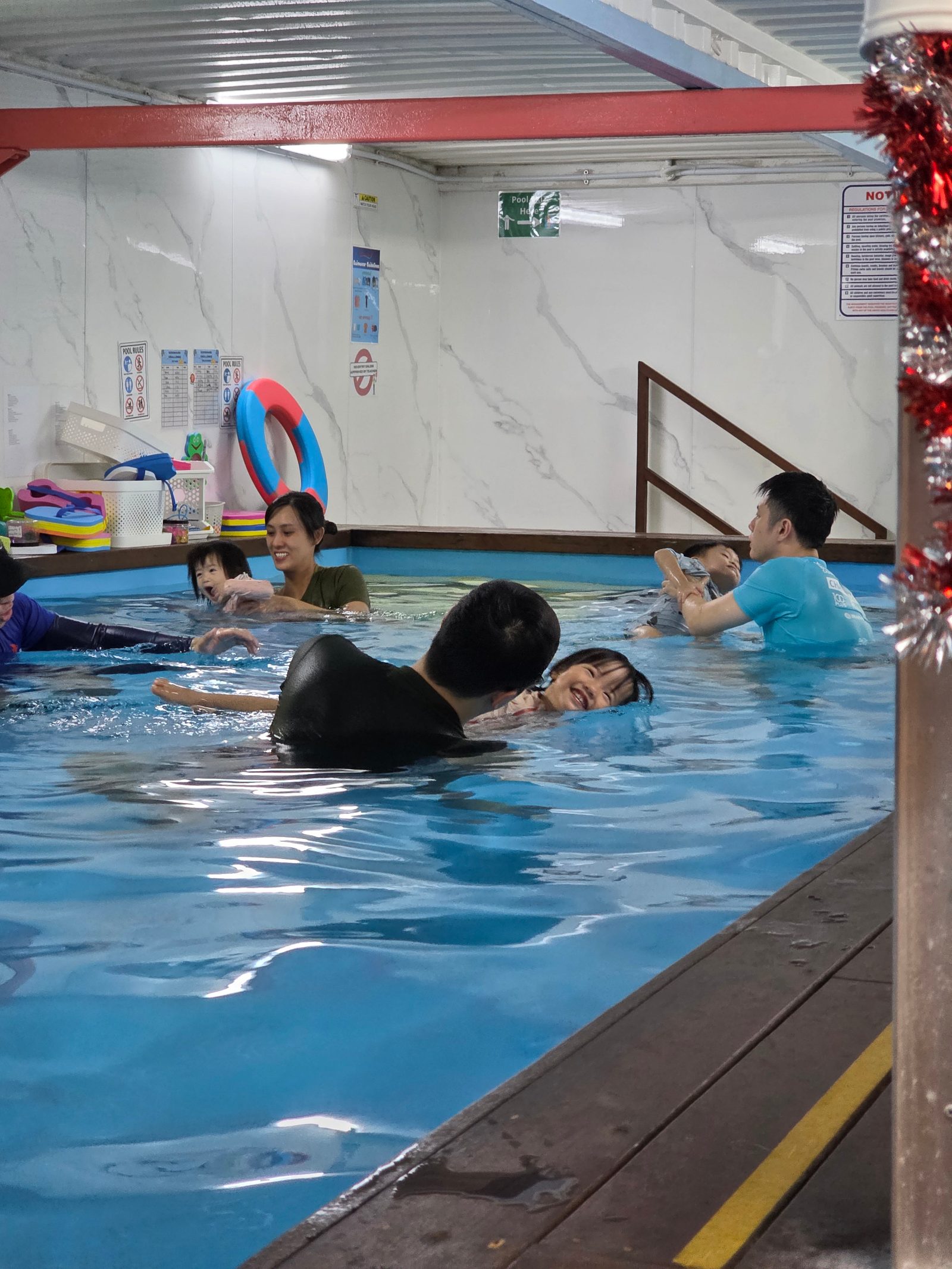
Our indoor pool at 102 Ulu Pandan Road uses a salt-chlorination system rather than raw chlorine dosing. Salt chlorination still sanitises the water effectively, but it tends to produce gentler, clearer water with a noticeably milder smell and feel than old-style chlorinated pools — many parents of eczema-prone kids tell us it's the difference between a flare and a completely uneventful lesson. It's not a guarantee for every child's skin, but it's a genuinely different starting point than a heavily chlorinated public pool.
The water is also heated to 31–34°C and the pool is fully indoors and sheltered. That matters more than parents expect: cold water and cold air after getting out can shock already-compromised skin and trigger itching, while a warm, stable environment is far more forgiving.
Before the Lesson
- Moisturise generously 20–30 minutes before getting in the water, so skin has a barrier rather than absorbing pool water directly into dry patches.
- Skip harsh soaps or scrubs on lesson days — keep the skin routine as gentle as your child's usual eczema care allows.
- Check with your child's doctor if they're mid-flare. A short pause during an active flare is sensible; it's not usually necessary during well-managed, quiet periods.
During the Lesson
Our classes are small — a maximum of 4 to 5 children per group across Infant (4–23 months), Toddler (24–35 months), Pre-School (36–59 months) and Kids (5+) — which means coaches notice quickly if a child seems uncomfortable or is scratching, and can flag it to you at pickup. For children with more sensitive skin, we're also happy to keep the group lesson to a similar duration but let you know if you'd prefer a private lesson instead, where the pace and breaks are entirely up to your child.
After the Lesson — the Part That Matters Most
This is where most flare-ups actually happen, not in the pool itself.
- Rinse off promptly with fresh water as soon as your child is out — we have change facilities with toiletries access on site, so this can happen right away rather than on the drive home.
- Pat, don't rub, dry with a soft towel.
- Moisturise again within a few minutes of drying off, while skin is still slightly damp — this locks in hydration far better than moisturising an hour later.
- Change out of the wet swimsuit quickly. A damp suit sitting against skin for the car ride home is a common, avoidable trigger.
Private and Condo Lessons as an Option
If your family's condo pool is heavily chlorinated or your child reacts unpredictably to different pools, our coaches also teach private 1-to-1 or small-group lessons at your own condo or home pool. This won't change the water itself, but it does let you control timing, warm-up, and the post-swim routine completely, which for some eczema-prone children is the bigger variable.
The Bottom Line
Eczema is a reason to be thoughtful about swimming, not a reason to avoid it. Swimming is genuinely good for children — for confidence, for safety, for fitness — and the skin-care habits above are simple enough to build into any weekly routine. If you're unsure how your child will react, a trial lesson is a low-pressure way to find out before committing to a term.
FAQ
Can a child with eczema join regular group swimming lessons?
In most cases, yes, especially when eczema is well-managed rather than actively flaring. We recommend moisturising before and immediately after class, and rinsing off promptly — most children with eczema attend weekly lessons without issues once this routine is in place.
Is your pool actually gentler on skin than a public pool?
Our pool uses a salt-chlorination system, which is generally milder on skin and eyes than conventional chlorine dosing, plus warm 31–34°C water and a fully sheltered indoor setting that avoids cold-air shock after getting out. Every child's skin is different, so we'd still suggest a trial lesson to see how your child responds.
Should I stop lessons during an active eczema flare?
It's sensible to pause or check with your child's doctor during a significant active flare, particularly if skin is broken or weeping. For everyday dryness or well-controlled eczema, most children swim without any change to their skin routine.
Are private lessons better for children with sensitive skin?
Not necessarily better, but they do give you more control — over pacing, breaks, and how quickly your child gets rinsed and moisturised afterwards. Some parents of eczema-prone children prefer this simply for the flexibility; others do perfectly well in our small group classes.
Ready to get your child swimming?
Book a trial at our warm indoor heated pool.