Ear and Eye Care After Swimming Lessons in Singapore
Red eyes and blocked ears after a lesson are common, but usually preventable. Here's what causes them and the simple habits that help.
By Carol Koh · Fabulous Swim School
"His ears feel blocked after every lesson" or "her eyes go pink and itchy in the car ride home" are two of the most common notes we get from parents. Neither means your child should stop swimming — both are usually a sign that a small after-swim routine is missing, not that something is wrong. Here's what's actually happening, and what helps.
Why Ears Feel Blocked After Swimming
Water that gets trapped in the ear canal — especially in young children whose canals are narrower — doesn't always drain out on its own. Left sitting there, it creates a warm, damp environment where bacteria can grow, which is what leads to the blocked, itchy or occasionally painful feeling parents describe as "swimmer's ear." Singapore's humidity doesn't help either, since ears that stay damp indoors take longer to dry naturally than they might in a drier climate.
The good news is that trapped water is easy to deal with if you catch it right after the lesson, before it's had time to sit.
Why Eyes Turn Red and Itchy
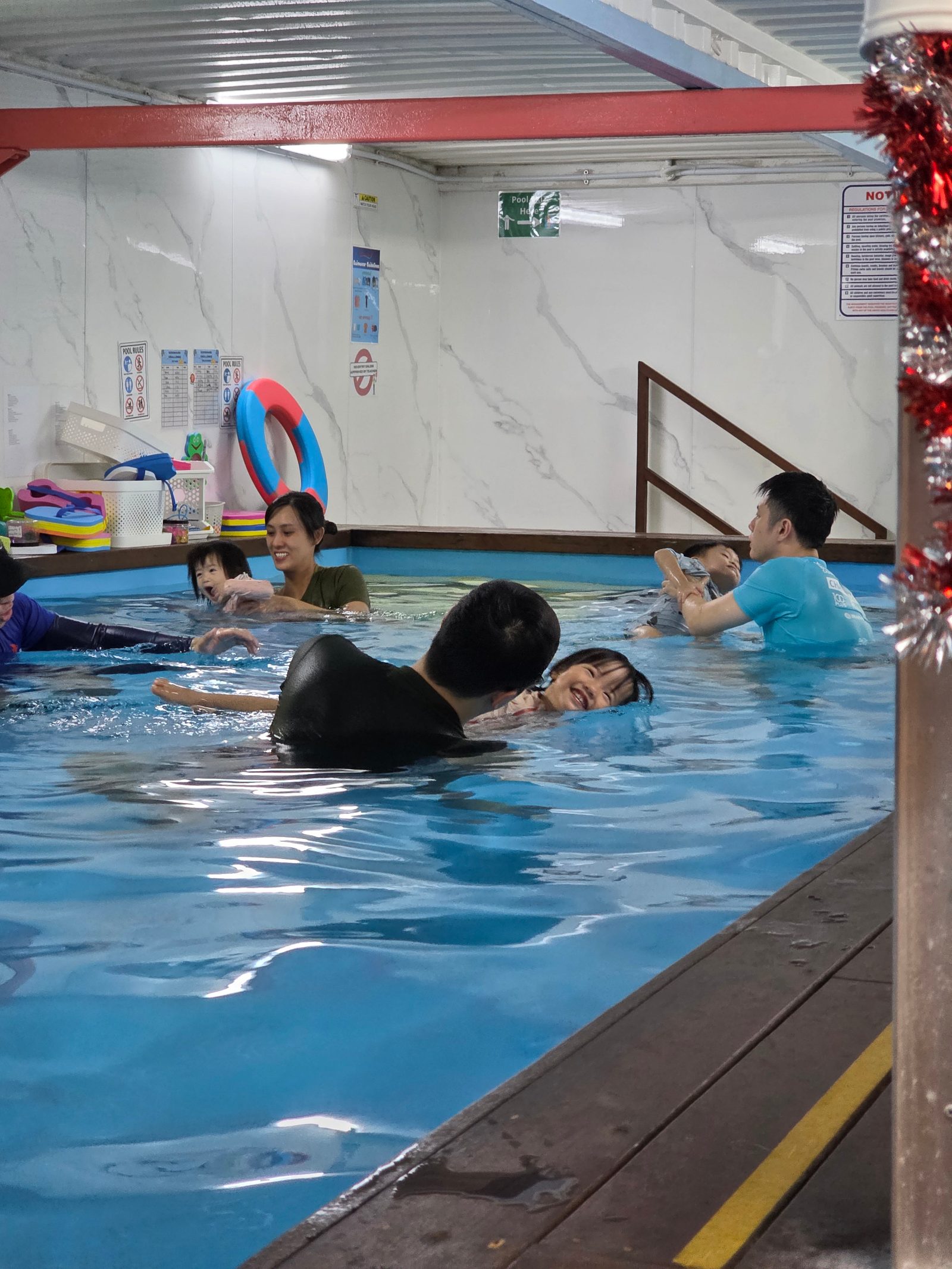
Eye irritation after swimming is usually a reaction to how long the eyes are exposed to pool chemicals, not a sign of a dirty pool — in fact, very red eyes are often a sign of a pool that's over-chlorinated or has an imbalanced pH, since well-balanced water is gentler than parents expect. Our indoor pool at 102 Ulu Pandan Road uses a salt-chlorination system rather than raw chlorine dosing, which tends to be noticeably milder on eyes, and the water is kept at a comfortable 31–34°C so there's no cold-water stinging on top of it. It's still pool water, though, so some children will be more sensitive than others regardless of the system used.
After-Lesson Ear Routine
- Tilt the head to each side right after getting out, gently pulling the earlobe down and back to help trapped water drain.
- Dry the outer ear with the corner of a soft towel — never insert a towel corner, finger or cotton bud into the ear canal itself, as this can push water further in or irritate the skin.
- Let a hairdryer help, on the lowest cool setting, held at a distance, if ears still feel blocked after a few minutes.
- Avoid cotton buds as a routine habit. They're one of the most common causes of irritated or injured ear canals in young children, precisely because parents reach for them after swimming.
For children who get recurrent blocked ears, ask your pharmacist or doctor about swimmer's earplugs — they're inexpensive, reusable, and solve the problem before it starts rather than after.
After-Lesson Eye Routine
- Rinse eyes with clean water as soon as your child is out of the pool. We have change facilities with toiletries access on site, so this can happen right away rather than waiting until you're home.
- Resist the urge to rub. Rubbing irritated eyes almost always makes redness and itchiness worse.
- Well-fitted goggles help more than anything else. A properly sealed pair keeps pool water off the eyes entirely during the lesson, which prevents most irritation before it starts.
What About Babies and Toddlers Who Don't Wear Goggles?
In our Infant (4–23 months) and Toddler (24–35 months) classes, most children aren't yet ready for goggles, and a parent or guardian is in the water with them throughout. Coaches keep submersions brief and controlled, and babies have a natural reflex that closes the airway and often the eyes briefly underwater. A quick rinse with clean water after class is usually all that's needed at this age — there's rarely any lingering irritation because exposure time is so short.
From Pre-School (36–59 months) onward, most children are ready to be properly fitted for goggles, which we're happy to help with — a poor seal is the single biggest reason goggles "don't work" and eyes still end up irritated.
When to See a Doctor
Most blocked ears and red eyes clear up within a few hours with the routine above. See a doctor if your child has ear pain that doesn't ease, discharge from the ear, hearing that stays muffled for more than a day, or eye redness with swelling, discharge or sensitivity to light — these go beyond ordinary post-swim irritation and are worth checking properly.
The Bottom Line
Blocked ears and red eyes are common enough that they shouldn't put anyone off swimming lessons — they're almost always solved by a two-minute routine right after class, not a reason to pause lessons altogether. If your child seems more sensitive than most, our coaches are happy to talk through goggle fit or timing adjustments at your next lesson.
FAQ
Can pool chemicals permanently damage my child's eyes?
No. Ordinary redness and itchiness from pool exposure is temporary and resolves within hours once the eyes are rinsed and rested. Persistent pain, swelling or vision changes are not typical and should be checked by a doctor, but everyday post-swim redness isn't a sign of lasting damage.
How do I stop my child getting swimmer's ear after every lesson?
Tilt the head to drain water immediately after getting out, dry only the outer ear, and avoid cotton buds. If it happens regularly, swimmer's earplugs worn during lessons are a simple, effective fix.
Should babies and toddlers wear goggles?
Most babies and toddlers aren't fitted for goggles yet — submersions in our Infant and Toddler classes are brief and a parent is in the water throughout, so irritation is rarely an issue at this age. We typically start goggle fitting from Pre-School (36–59 months) onward.
Is your pool gentler on eyes and ears than a typical public pool?
Our indoor pool uses a salt-chlorination system, which is generally milder than conventional chlorine dosing, alongside warm 31–34°C water. It's still pool water, so sensitivity varies by child, but many parents notice less irritation than at heavily chlorinated public pools.
Ready to get your child swimming?
Book a trial at our warm indoor heated pool.