Best Infant Swimming Lessons Singapore – What to Expect
More families are choosing early, parent-accompanied water time because it builds calm water confidence.
By Carol Koh · Fabulous Swim School
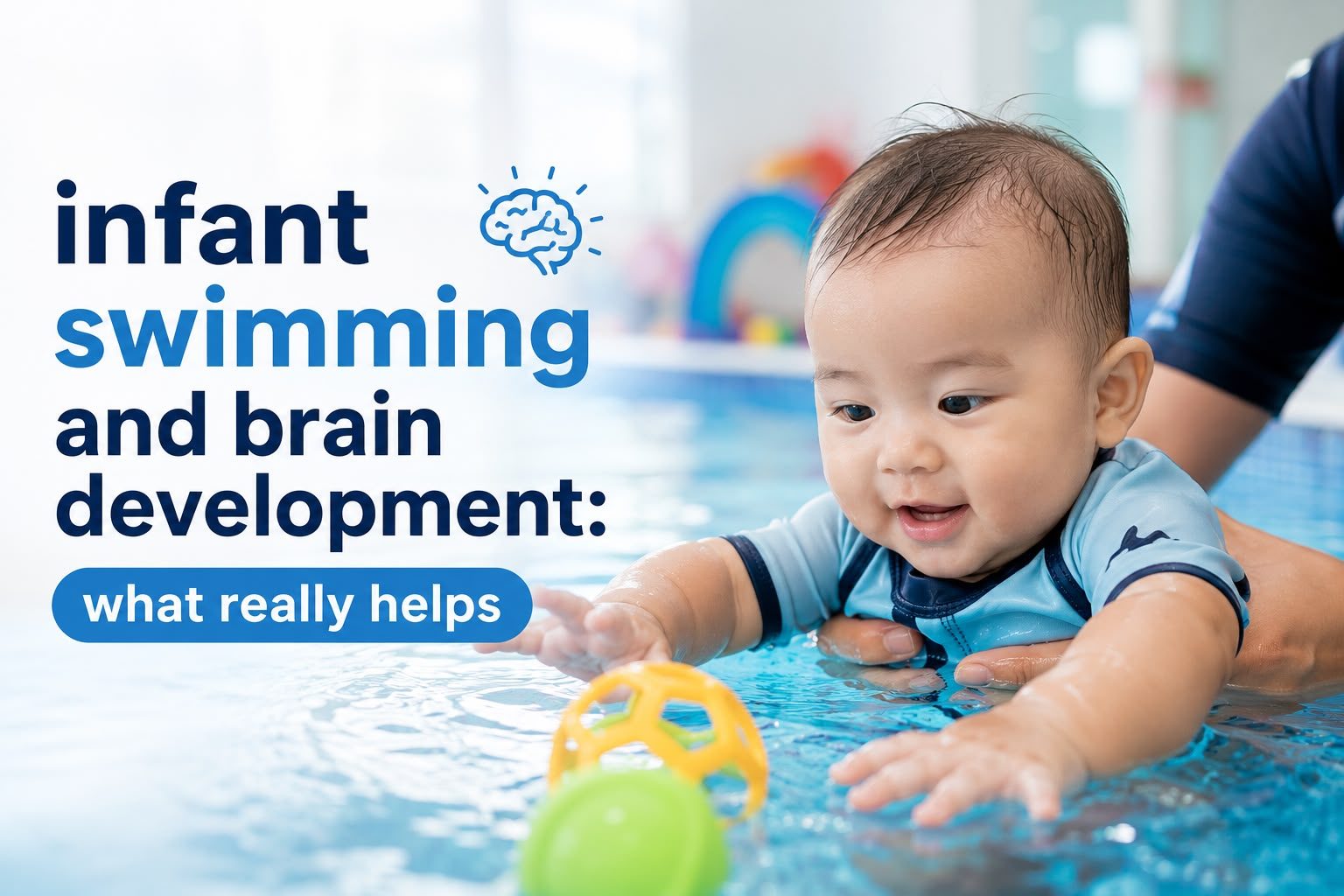
Curious about infant swimming lessons in Singapore and whether your baby is ready? More families are choosing early, parent-accompanied water time because it builds calm water confidence, supports motor development and strengthens bonding.
What Are Infant Swimming Lessons?
Infant swimming lessons are gentle, structured classes for babies roughly 4 months to 3 years, designed to build water familiarity and early safety habits — not laps or speed. Sessions are parent-assisted and focus on:
- Floating & gliding (supported back "starfish", calm tummy glides)
- Kicking & paddling (tiny, playful propulsion)
- Breath awareness (bubbles, face sprinkles, short "in-out" dips)
- Wall skills (reach-and-hold, "monkey walks" along the ledge)
- Water play with toys and songs to keep everything predictable and fun
Key Benefits for Babies & Parents
- Early water confidence: Weekly exposure reduces fear and builds trust.
- Motor development: Warm water provides gentle resistance that supports core strength, balance and coordination.
- Cognitive & social growth: Short cues, turn-taking and group play stimulate attention and language.
- Better sleep & routine: Light exercise and warm water often help babies settle post-class.
- Parent-child bonding: Skin-to-skin contact, eye contact and shared wins create happy water memories.
When to Start (and Readiness Signs)
Many families begin from 4–6 months (with steady head/neck control) and expand skills as toddlers can follow instructions. Keep sessions short (15–25 minutes), warm, and end on a win.
Common Myths (Friendly Facts)
- "Warm pools cause colds." Colds are viral; warm water actually helps babies relax and practise longer.
- "One dunk makes them fearless." Confidence comes from many predictable mini-steps, not one big moment.
- "Floaties speed learning." Hands-on support and shallow water help babies learn real balance and breath cues.
How to Choose a Swim School
- Warm, predictable water: Infant-friendly temperature (~32–34°C) and indoor setting.
- Infant-trained coaches: Look for parent-accompanied formats and cue-based teaching.
- Small classes: Plenty of attention; calmer water; faster micro-wins.
- Hygiene: Clear water-quality standards and post-class rinse facilities.
- Location & parking: Easy access increases consistency.
FAQs
What age is best to begin?
Many families begin from 4–6 months with parent-accompanied classes, focusing on comfort, bubbles and supported floats.
How long is each session?
Infant sessions typically run 15–25 minutes. Short, cheerful and consistent beats long, tiring classes.
Will my baby actually "learn to swim" this young?
Think foundations — calm face-in, breath awareness, back floats and wall holds. Formal strokes come later.
Is a heated pool necessary?
Warm water (~32–34°C) keeps bodies relaxed and breathing steady, which means more smiles and better practice.
Ready to get your child swimming?
Book a trial at our warm indoor heated pool.
Originally published on fabulousswim.com